
Hit It Impact Play - a SHAG Mini-Workshop - PART 3
November 10, 2022
Hit It Impact Play - a SHAG Mini-Workshop - PART 3
Hosted by Artemis
Watch on IG @weloveshag
YouTube @weloveshag
If you haven’t checked out parts 1 and 2 of this workshop, read the transcripts here and here!
Besides hands, there are many options! Let’s start with floggers. Generally speaking, if you are a beginner, you want a shorter flogger. The tails on floggers are called “falls.” Shorter falls are going to be easier to manipulate the flogger than longer falls, which require a little more precision and technique. There’s a learning curve. With longer falls, you are going to end up standing further away from your partner. This might be a space consideration; if your apartment or play area is very small, you do not physically have space to stand far enough from your partner to hit using a flogger with long falls. Besides fall length, there is also the density of falls to consider. The fewer falls there are, the more of a stinging sensation the bottom will feel. The more falls, the more of a thudding sensation. The reason for this is that the impact is being spread across a wider surface area with more falls.
General flogging technique is about trying to catch the person with just the tails of the flogger. This means more control of where your impact lands. The goal is to avoid wrapping the flogger around the body on impact. Besides not having a satisfying impact feel or sound, that's going to potentially hurt the person you are flogging. Falls that wrap around on impact could be hitting an area with bones, genitals, or somewhere else that is either unsafe or simply not part of the agreed upon plan. Hitting with just the tips of the falls makes for a very precise impact.
When it comes to shopping for your impact toys, always test the instrument when you're in the store! The forearm is an excellent place to test the impact and will give you a better read than hitting your hand. Your hand has a different system of sensory receptors and is not so sensitive compared to other skin, like that of the forearm. Testing in store also allows you to see the marks the flogger leaves, which is helpful. Testing an impact tool is something you’ll do once you own a toy as well. In a scene, it is totally okay and, in fact, recommended to try everything on yourself as a top! Even if you have used the tool before, before you go and hit someone with it, it helps to remind yourself what effort feels easy on the receiving end. If you come in swinging the implement immediately, you may not necessarily remember exactly what it feels like; it is a totally valid thing to check it on your arm before and during play. There is a learning curve to acquiring good flogging technique with these tools as well. You will not have success if you just let it rip as though it were a single tail whip. You have to prepare your blow by getting the tails in order with a bit of a backswing. You want all the falls to stay together on impact, which means you will need to use a circular, swinging motion. When the falls don’t stay together, the sensation of impact is more like a little sprinkling of confetti, which is probably not what you are intending.
Let’s look at some of the flogger options at SHAG. This one has a thick metal handle, which you can also use for blunt impact, which means you get sting (the falls) and thud (the handle) in one toy. The cold metal can also be used to soothe warm skin as a little reprieve before more impact. The Evan Flo Good Top Bad Top is also fun to play with. As you are switching tools in a scene, remember to check in with your partner. In addition to having a negotiating conversation before or at the start of play, you want to keep that communication going throughout. That could mean saying, “Hey, where are we at?” Toy selection can also be an exciting way to build anticipation through communication before or during the scene: “What are we trying to get into? How far are we trying to go? What tools do we want us to use? What toys do we have that we're curious about trying?” It is absolutely possible for someone to one day be full of enthusiasm for the flogger - “Hell yeah, let's go. I want to really get into the flogger.” - and another day, or just another moment in that same scene, have reservations. They might say, “You know what? Just your hands. Let's just take it easy. I'm not trying to go somewhere crazy.” That ongoing conversation between play partners is crucial.
Let’s move on to paddles! Paddles are a little more risky than a flogger, or perhaps have a little more potential for danger. A paddle is a weapon, a real solid thing, which means we do not want to hit bone and we really do not want to hit organs like the kidney. Paddles tend to be a little more thuddy than stingy, and that makes for fun impact play, because there are edges of intensity you can play with that you might not be able to reach with a flogger. Paddles also allow for more fun with rhythm by nature of the sounds they make. The material the paddle is made of is important. Leather paddles are a little bit more flexible or forgiving than wooden ones, but still totally painful. Silicone paddles can create both a thud and a sting, and their thickness will change their impact greatly. Lastly, we have crops, which are, for the most part, more stingy, like whips. The same rules apply as with whips: shorter ones are easier to use. Like whips and paddles, the material a crop is made of can play a huge role. A cool metal crop will have a very different feel from a textured leather one.
Picking your toys allows you to be deliberate about where and how you are hitting. Also important is keeping a mental map, a little heat map, of where you have already been hitting and where the skin is very warmed up. Then you can decide to evenly treat the whole body, or really go to town on one spot. It's a very different sensation to hit someone in a new spot versus in the same spot over and over and over. Even impact of the exact same force will feel that much different if you are experiencing that impact repeatedly. These options – toy choice and a heat map of the skin – give you a lot of vocabulary as a top. You might focus in on one spot until you start reaching a limit, and then perhaps you go for a little walk around town and explore other areas of the body, only to later revisit that already tender area. Limiting yourself to one area and one area alone makes for one specific kind of scene and eliminates a lot of possibilities. Playing with where you hit, how you hit, and with what tools you hit can make for a kind of communication all its own: a textured, curated experience that lets your bottom feel cared for, pushed, and so forth. As you explore impact play, do not forget to explore these little details!
As we end this workshop, I would like to give you an easy tip for reducing risk! Safe words are a tool to mitigate risk and communicate quickly and efficiently mid-scene. They are a short-cut. One common system is red, yellow, and green. Red indicates a full stop: I'm not having a good time, I'm going through something, and I need to end the scene. Yellow is a sign to slow down and be alert: I'm still having a good time, but this thing right now is not good or I’m nearing my limit. Yellow indicates that we are going to check in and see if something can change to keep what we’re doing going, but more comfortably. Green, of course, communicates happy enthusiasm: “Hell yeah, let's go!” This system gives you a little bit more safety than just communicating with the words “yes” and “no,” because sometimes, in very intense scenes, a bottom might want the ability to say “no, ow, no, ow, ow, ow,” but have the scene continue. The word “no” might itself be part of the scene you are having. By checking in with the bottom and using the safe word system, you, as a top, can hear “no, no, ow, green” all in one breath, which clearly indicates that your partner wants the scene to continue and is having a good time.
Finally, let’s discuss after care. This is something that, again, in a perfect world, would be present in all sex! After care moments can be some of the most wonderful, rich, intimate parts of sex. After you've had a scene of any kind, or sex of any kind, after care is something you do to check in with each other and see how you can best support each other after this experience you've gone through together. That can be something that's discussed beforehand as well: “What do you usually like during after care, if you already know?” There are as many answers to this question as there are people! A bottom might say, “I want to be left alone,” or “I need to go to the bathroom and wash my face and hang out by myself.” That's ok! Or, they might say, “I only want to cuddle and watch a movie and have a cocoa after our scene.” Talking about after care during negotiation, before the scene, and then also after, while checking in at the end of the scene, will make for the best experience in processing what you just went through, which in turn makes it possible to do it again and have fun.
Sometimes after care can mean talking about the scene and saying, about what was cool, what was fun, what wasn’t so fun. While those conversations should happen, they do not have to happen during aftercare. The conversation about what worked or didn’t work in the scene could be something that happens later at a coffee shop. The only requirement for after care is checking in with your partner. There is an assumption that after care is always something the top gives to the bottom, but tops need after care too. I think we have a global top shortage because we've not been taking care of our tops! Aftercare is a two-way street that involves taking care of one another.
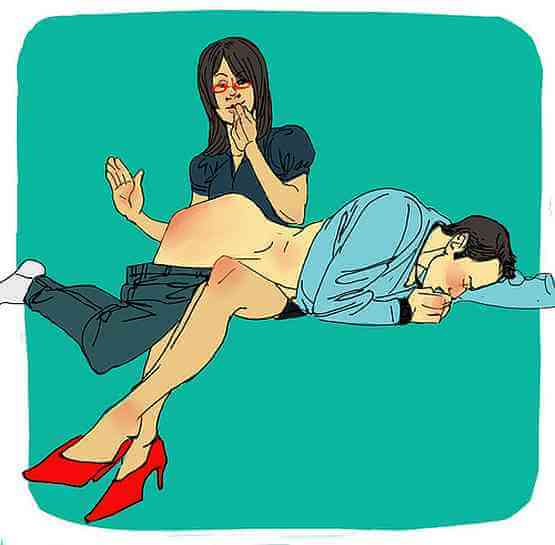
The very last thing I want to mention is that impact play does not have to mean two partners in a room together. You can try stuff on yourself. Starting alone, spanking yourself, can be a great way to explore. You can also do stuff on yourself as part of virtual impact play. If two play partners are long-distance, one person can give directions to the other over the phone. Solo or self impact play is a good way to test your own limits and see what sensations you like and don't like, all in a very safe, low risk situation. No need for safe words with yourself!
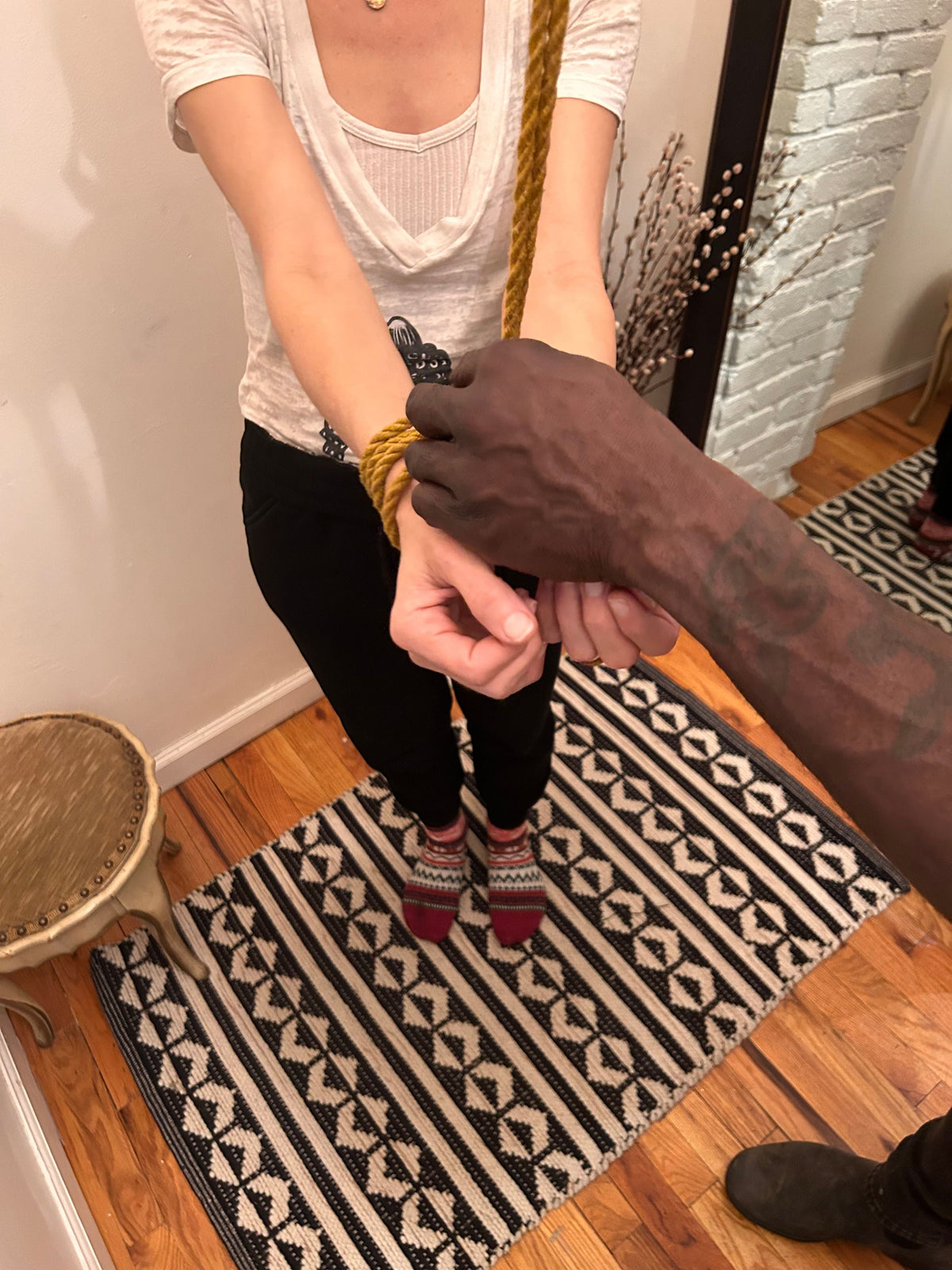
Some folx attending this workshop live have asked for impact toy recommendations for beginners. A good place to start is with a small, lightweight flogger. SHAG has a lot of very nice options that fit this bill, and at nice price points for a starter toy. Remember that a short, manageable length lets you moderate the sensation a lot. You might also consider starting with something very soft. Floggers can be nice for little ticklish moments, too! A really fun thing in an impact scene is playing with anticipation, especially if your partner is in a position where they're not facing you or are blindfolded. It can be really rich to tease them with the toy, and then perhaps even go get a cup of water, leaving them there, and then come back! This patience game of not knowing when the next hit is going to come or hitting four times before an unexpected break can be a part of the whole physical dialogue you’re having with your partner during an impact scene. Last but not least, if you have enjoyed learning about impact play, you might also take an interest in bondage. We have ongoing classes in Shibari, the Japanese art of rope bondage!
**This text was transcribed from SHAG’s live Mini-Workshop on November 10, 2022 and edited for clarity. This opinion piece is not intended to constitute licensed expert advice; all content is for general informational purposes only.**

Comments