
Negotiation Is Sexy: How Shibari Teaches Communication
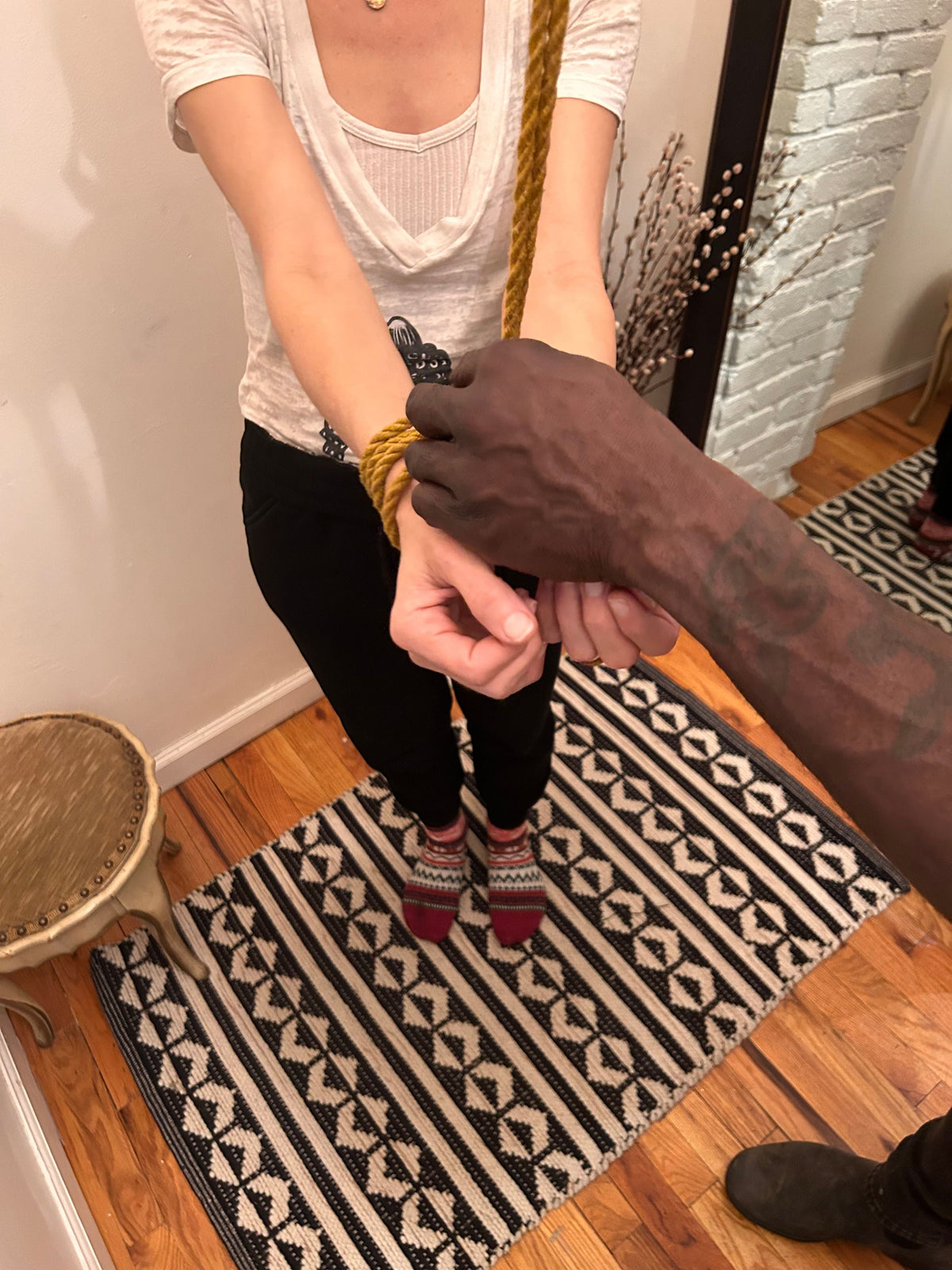
Shibari begins with intention. Before the rope ever touches skin, there’s a moment of mutual agreement and a shared decision to slow down, pay attention and trust one another. The act of tying becomes an intimate conversation, spoken through breath, tension and carefully placed knots. Every wrap is deliberate. Every pause is a quiet question: Are you still here with me?
Then the rope comes out, and communication gets very literal. You say what you need. You listen. You adjust. You check in and repeat. Rope has a funny way of making people honest. You can’t really wing it when someone is quite literally tied to your decisions. Every knot asks for attention, and every shift in the body is feedback. Shibari becomes a shared puzzle; part trust exercise, part slow dance, where communication isn’t awkward or optional, but built into the experience.
At its core, shibari is rooted in consent, negotiation and trust. Ethical rope educators emphasize that consent is not a one-time agreement, but an ongoing conversation that continues before, during and after a tie. Clear communication about physical limits, emotional boundaries and expectations is foundational to responsible rope practice.
This negotiation may sound formal, but in practice it’s deeply human. Partners talk through what they’re curious about, what’s off-limits and what kind of experience they want to share. Is this a technical practice session? Something sensual? Something playful? These conversations don’t drain the magic, they create it.
Consent education often references the FRIES model: freely given, reversible, informed, enthusiastic and specific.
In shibari, these principles aren’t theoretical. Sensation changes. Circulation shifts. Emotions surface. The ability to say “yes,” “not like that,” or “let’s pause” — and be heard immediately — is essential. Rope doesn’t allow for guessing games.
Research on consent communication shows that while people recognize its benefits, many struggle with discomfort or fear of rejection when trying to be direct. Studies suggest that consent communication improves connection and safety, even as social awkwardness remains a barrier.
Shibari helps remove that barrier by making communication expected. When honesty is built into the structure, it stops feeling awkward and starts feeling like care.
Many rope educators encourage establishing safewords and nonverbal signals, especially since rope can restrict movement or speech. These tools create a shared language rooted in responsiveness and respect.
Aftercare — the intentional practice of checking in, reconnecting and processing after a scene — is another cornerstone of rope culture. Counselors note that aftercare includes emotional reflection and conversation, not just physical comfort.
Studies examining BDSM dynamics have linked direct communication to higher sexual satisfaction, with negotiation playing a key role.
You don’t need rope to learn these skills, but rope makes them impossible to ignore. Shibari teaches that saying what you want doesn’t ruin intimacy. Listening doesn’t weaken desire. And care isn’t optional, it’s part of the contract.
Negotiation is sexy because it’s honest. Because it’s present. Because it turns communication into something you can feel, not just hope for.
And being held by someone who’s paying attention? Always in style.


Comments